Picture a small home decor and garden shop opening on a busy street. The shelves are stocked, the sign is up, and a few neighbors stop in. But when someone across town searches for outdoor planters and patio decor, the shop doesn’t appear anywhere.
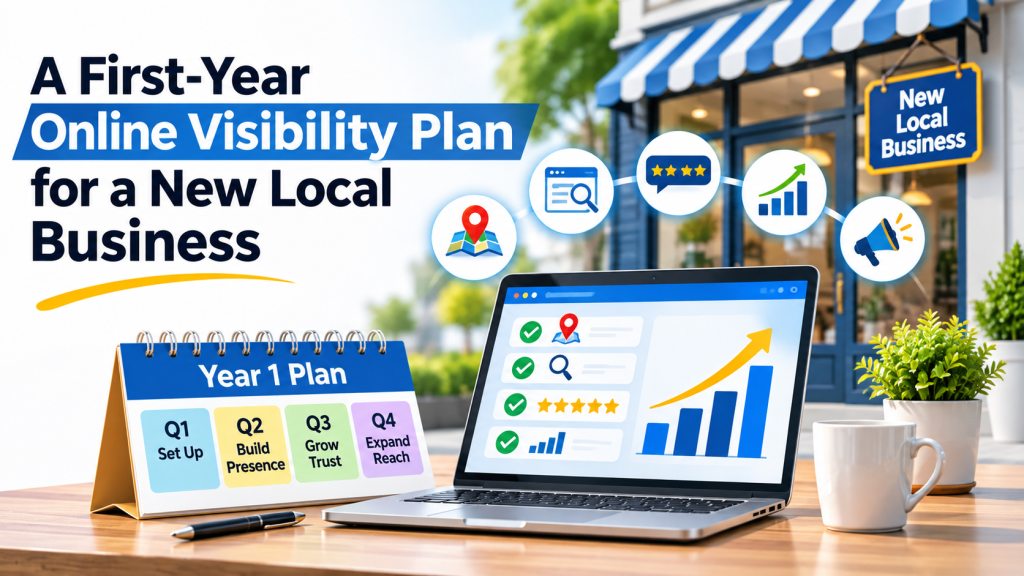
New businesses often focus on the physical launch and leave their online presence for later. A simple first-year plan can close that gap.
Month One: Build the Foundation
Start with the basics customers need to find and contact you. Settle on your official business name, address, phone number, and hours, and use them exactly the same way everywhere.
Next, set up a simple website with your products or services, location, hours, contact details, and a few real photos. Then create and verify your Google Business Profile, choose the most accurate primary category, and add photos of your storefront and products. If you also serve customers at their homes, such as with landscaping or interior design work, set your service area accurately.
Months Two and Three: Expand Where People Can Find You
Once the core is in place, add profiles on other platforms customers use, such as Apple Business Connect, Bing Places, Yelp, and relevant social media pages. Local chambers of commerce and business associations often provide member listings as well.
General online business directories add another point of discovery. A new shop could list itself on downtownlists.com/ under Home Decor and Garden, where local shoppers browsing that category can find its details. Choose categories carefully, complete every field you can, and use the same NAP details as your website.
This stage is also a good time to start asking early customers for honest reviews.
The Rest of the Year: Keep Everything Current
Online visibility isn’t a one-time task. Update holiday hours, post new photos as your inventory or services change, and answer questions customers ask through your profiles. Keep a simple log of every listing you create so you can update them all if your phone number or address changes.
Common first-year mistakes include using several variations of your business name, abandoning social profiles after a few posts, and forgetting to update listings after a move.
Getting Started
You don't need a large budget to build a solid online presence. Start with accurate basics, add trusted listings gradually, and maintain them as your business grows. Adding your shop to downtownlists.com/ is one practical step in that process.
Frequently Asked Questions
Do I need a website if I already have a Google Business Profile?
A website is still worth having. Your Business Profile shows key details, but a website gives you space to explain your products, services, policies, and story in your own words. It also gives every other listing a consistent place to link to, and it remains fully under your control.
When should a new business start asking for reviews?
As soon as you have real customers. Early reviews help new businesses because people often hesitate to try a place with no feedback at all. Ask in person, include a link on receipts or emails, and keep it easy. Never post reviews yourself or ask friends to pose as customers.
How many directories should a new business join?
Start small. Set up the major platforms first, then add a few reputable general and local directories, plus any industry-specific sites your customers use. It’s better to maintain ten accurate listings than to create fifty you can’t keep updated, especially if your address or hours change during the first year.
What if my business doesn’t have a storefront yet?
You can still build visibility. Service-area businesses can create a Google Business Profile, hide their address, and list the areas they serve instead. Use the same business name and phone number everywhere, and avoid publishing a home address unless you’re comfortable with customers seeing it.

Downtownlists.com Team
We help people find the best local businesses in their area and help businesses connect with local customers across the USA.